A PR box does two jobs at once. It has to survive a courier network and then look immaculate the moment a creator opens it on camera. More brands now want it to do a third thing: hold up as a genuinely recyclable package rather than a glossy box that quietly ends up in landfill. Those goals pull against each other, and the material choices you make at the quote stage decide which one wins. This guide walks through the box body, the insert, the board strength, and the finishes, with the trade-offs stated in plain numbers so you can specify a box that is both unboxing-ready and honestly sustainable.
The box body: corrugated, rigid, or a hybrid
Corrugated mailer boxes are the default for seeding campaigns because they are light, printable, and recyclable in most curbside programs. The fluted middle layer gives them structure while keeping the walls thin. A single-wall corrugated mailer is usually all a beauty or apparel drop needs, and it folds flat for storage and lower freight cost. Rigid setup boxes, the kind with a solid greyboard core wrapped in printed paper, feel more premium and hold a magnetic-close lid beautifully, but that construction is where sustainability gets complicated. The greyboard is typically 1.5 to 3 millimeters thick, and the outer wrap is often laminated, which can push the finished box out of curbside recycling even though the core is paper. Magnets and ribbon add further contamination. A practical middle path is an E-flute corrugated box with a crisp printed surface: the thin flute (roughly 1.5 millimeters) prints almost as sharply as a rigid wrap and reads as premium on camera, while staying a single, recyclable paper stream.
Inserts decide whether the box is truly recyclable
The insert is the part buyers underestimate and the part that most often breaks a recycling claim. A foam insert cradles a fragile product better than anything else, but EVA and PU foams are not curbside recyclable and undercut the whole sustainability story. Molded pulp, made from recycled paper fiber, is compostable and recyclable and photographs as a clean matte tray, which is why it has become the go-to for premium eco drops. Die-cut corrugated or paperboard inserts are the cheapest option and stay in the same recyclable paper stream as the box. The cost gap is real and worth seeing before you commit, especially because molded pulp also carries a one-time mold tooling cost, commonly in the region of $1,000 to $3,000, that only makes sense once your volumes are high enough to amortize it.
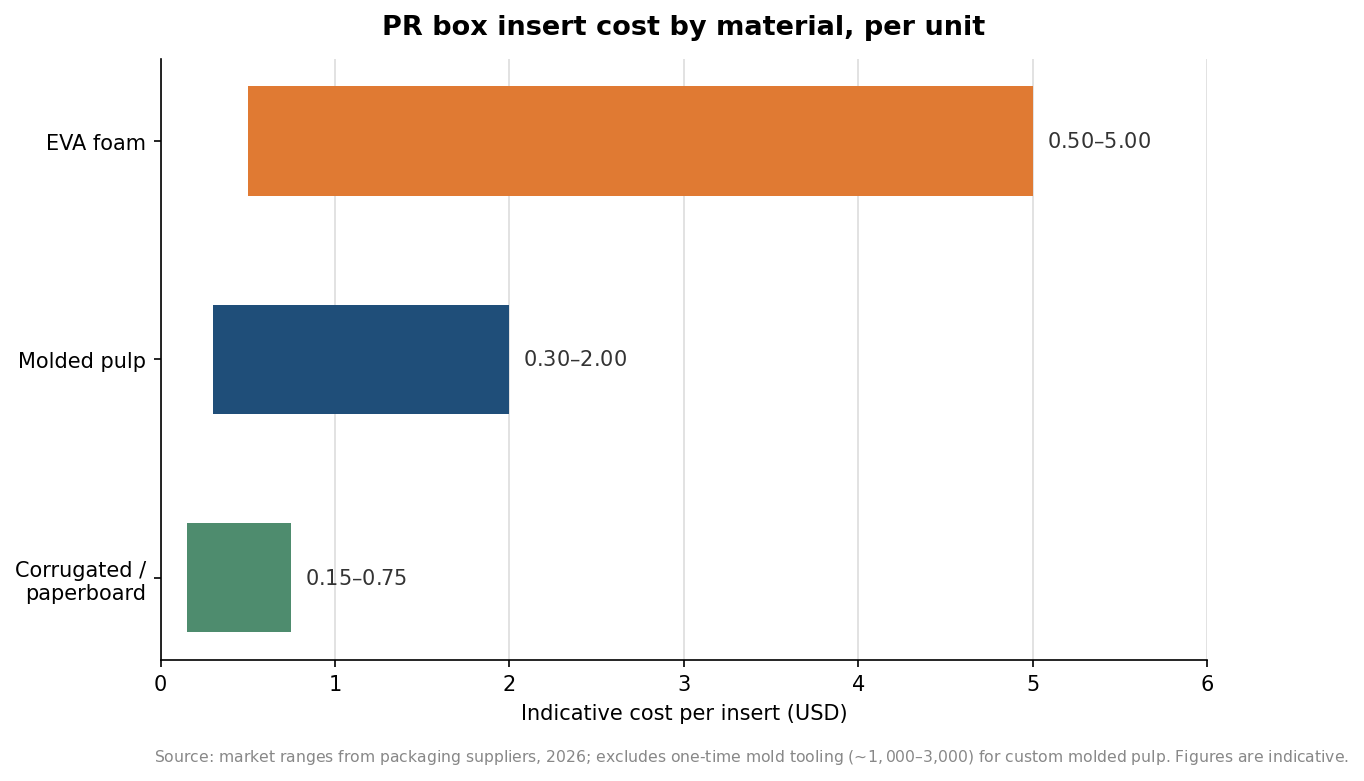
The tooling math matters more than the per-unit number. At a few hundred units, a die-cut corrugated tray at $0.15 to $0.75 each will almost always beat molded pulp once you fold in the mold cost. Molded pulp earns its place at higher, repeated volumes where the mold cost spreads thin and the material’s appearance and eco-credentials justify the premium. Foam, at $0.50 to $5.00 per unit depending on complexity, is best reserved for genuinely fragile electronics or glass where protection outranks the recycling goal, and even then many brands now switch to molded pulp with a paper-based cushioning layer to keep the package single-stream.
Board strength: reading ECT so the box survives the courier
Edge Crush Test, or ECT, is the number that tells you how much stacking force a corrugated board can take. It is the spec to get right, because a box that looks perfect but arrives crushed defeats the entire campaign. 32 ECT single-wall is the most common e-commerce grade and handles a gross packed weight up to roughly 65 pounds, which is far more than any beauty or apparel PR box will ever weigh; here the limiting factor is stacking in transit, not the product weight. Stepping up to 44 ECT raises the ceiling toward 95 pounds and buys extra resilience if boxes are stacked five or more high in a warehouse or if you are shipping heavier tech kits. Double-wall grades such as 48 ECT push past 120 pounds and are overkill for most seeding work.
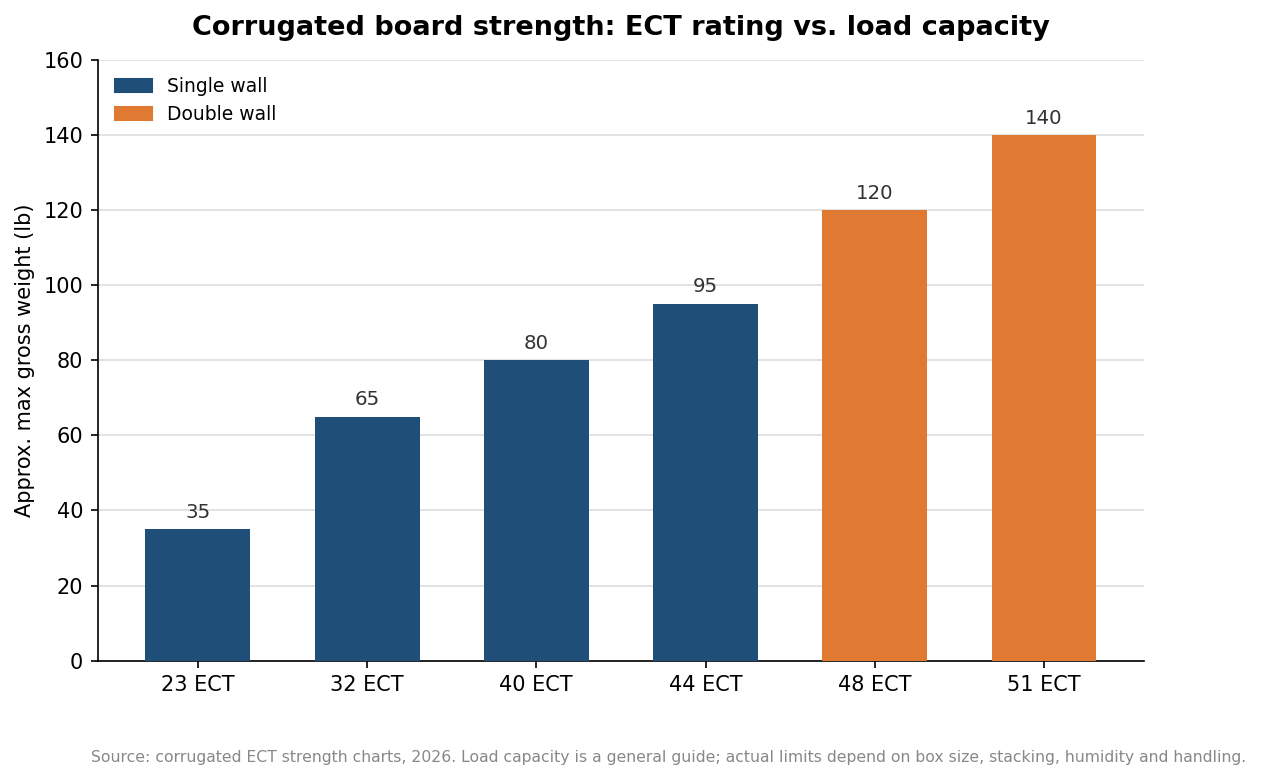
These load figures are a general guide rather than a guarantee. Real-world strength drops with box size, humidity, rough handling, and how long a box sits under load, so treat the numbers as headroom and not a target to fill. For a typical PR box weighing one to three pounds packed, 32 ECT single-wall with a well-fitted insert is usually the right and most economical call; reserve heavier board for oversized boxes or campaigns where you know the courier stacks hard.
Inks, coatings, and the claims you can actually back
Finishes are where a sustainable box is quietly won or lost. Water-based and soy-based inks print cleanly on corrugated and do not interfere with recycling the way heavy plastic coatings can. The finish that most often breaks recyclability is a full plastic lamination, matte or gloss, laid across the whole box; it looks luxurious but can render the paper non-recyclable in many programs. If you want a premium surface while keeping the box curbside-friendly, spot treatments are the smarter route: a spot-UV highlight, a blind emboss, or a small foil detail keeps the majority of the surface as bare, recyclable board. Void fill follows the same logic. Crinkle paper, honeycomb wrap, and paper shred stay in the recyclable stream, while bubble wrap and air pillows introduce plastic that a creator has to separate out on camera.
Certifications should be specific, not decorative. If you plan to say a box is responsibly sourced, ask the printer for FSC chain-of-custody documentation on the board rather than a generic leaf logo, and if you claim recycled content, ask for the post-consumer waste percentage in writing. Avoid vague words like eco or green on the packaging itself unless you can point to the underlying material spec, because unsupported environmental claims are increasingly scrutinized. The honest position is usually the strongest one: a single-material corrugated box, a paper-based insert, water-based inks, and paper void fill make a package that a recipient can drop in one bin, and that simple truth is more persuasive than a laminated box with a green sticker.
Put together, the specification that satisfies both the camera and the recycling bin is less exotic than it sounds. Start with an E-flute or 32 ECT single-wall corrugated body, choose a die-cut paperboard or molded-pulp insert sized to the product, print with water-based inks, add a spot finish instead of full lamination, and fill with paper. It ships well, it opens beautifully, and every part of it goes in the same bin. Lead times and minimum order quantities vary widely by supplier and by whether custom tooling is involved, so confirm both in writing before you lock a launch date.
Leave a Reply